 B
B
Social-Ecological Systems Working Group

A bull wood bison stands next to the Innoko River. Photo: AK Dept. of Fish and Game

Q-methology helps identify shared perspectives and understand research priorities. Photo: T. Brinkman

A graduate student explains her research on wood bison ecology at a conference.

At a public meeting in a village, paricipants ranked research needs related to environmental change.

Moose locations from radio-collared animals can be compared with information from hunters to improve how agencies manage moose hunting. Photo: AK Dept. of Fish and Game
Lead

Todd Brinkman
Professor of Wildlife Ecology
University of Alaska Fairbanks
Collaborators

Taylor Stinchcomb
Social/Wildlife Scientist
Wildlife Conservation Society

Chaya Gordon
Graduate Student
University of Alaska Fairbanks

Tom Seaton
Biologist
ADFG

Ophelie Couriot
Asst. Prof Wildlife Ecology
University of Alaska Fairbanks

Ellen Candler
Asst. Prof Wildlife Ecology
University of Alaska Fairbanks
Comprehensive data do not exist on Interior Alaska residents’ values and attitudes toward climate-driven changes and disturbances. This information is required to conduct research that is relevant, salient, and useful to communities, tribes, managers, and policymakers. Previous surveys conducted across Interior Alaska about perceptions of climate-related change have either had a strong breadth and limited depth or vice versa. In addition, most of this research has been conducted in rural communities, although nearly all Interior Alaska residents (~95%) live in urban areas. To address these shortcomings, we are conducting research to identify perspectives on research priorities related to environmental change. We are using a Q-sort methodology to list and rank pressing research needs. So far, we have collected perspectives from Bonanza Creek LTER investigators, two rural Indigenous communities, and Fairbanks residents and organizations. These data will help make future research at Bonanza Creek LTERmore relevant and translational to local needs.
Based on suggestions from Bonanza Creek LTER’s Alaska Native Advisory Council, we have also initiated new research that addresses important wildlife issues that Interior communities care about. Our research will focus on wood bison. More specifically, our objectives are to understand diet, foraging behavior, and ecological impacts, with specific research questions informed by community input and priorities. This research will be led by doctoral student Chaya Gordon.
What are the research priorities of Interior Alaska interest groups (LTER investigators, rural communities, Fairbanks residents and organizations) related to environmental change?
We used Q-Methodology to identify shared perspectives among Bonanza Creek LTER members and understand the most important research priorities to each perspective. The Q-method is a well-established approach that combines qualitative research techniques with exploratory factor analysis to elicit perspectives about a topic or issue that exists within or among social groups. Our study was conducted in three stages. In Stage 1 (May-Dec 2023), we conducted focus-group discussions with Bonanza Creek LTER members to develop a Q-set of statements about research priorities. We framed these statements in terms of research topics, actions, or value and worded each statement to fit into the following sentence; “I think research on environmental change in Interior Alaska should study or focus on….” We then pretested the Q-set, made several iterations of revisions, and ultimately generated 31 statements.
In Stage 2 (Jan-Apr 2024), we invited all BNZ LTER members to complete an online survey that asked them to rank statements from lowest to highest priority. The ranking process asked participants to sort statements into a symmetrical pyramid of boxes, with each box receiving one statement. We required the statements to be sorted into a normal distribution because this forces participants to think more critically about their true priorities. In the third stage (May-Jun 2024) we used factor analysis to identify sorting patterns, shared perspectives, and distinguishing statements of each perspective. We received 41 usable Q sorts for a response rate of 32%. Our sample was 22 female, 19 male, and included 28 faculty/investigators, 6 students, and 7 staff/technicians. Pooling all respondents and using the mean rank value, the highest priority for research was “tackling large-scale, ecosystem level questions that will have regional or global consequences” (see Table 1 for top five mean rank values of all responses). The lowest priority for research was “addressing despair, grief, and anxiety due to environmental change.”
In 2024, we conducted Q-sorts with two rural Indigenous communities in Interior Alaska. Community 1 generated 31 statements and had 54 community members participate in the sorting process (Table 2) . Community 2 generated 26 statements and had 22 community members participate in the sorting process (Table 2).
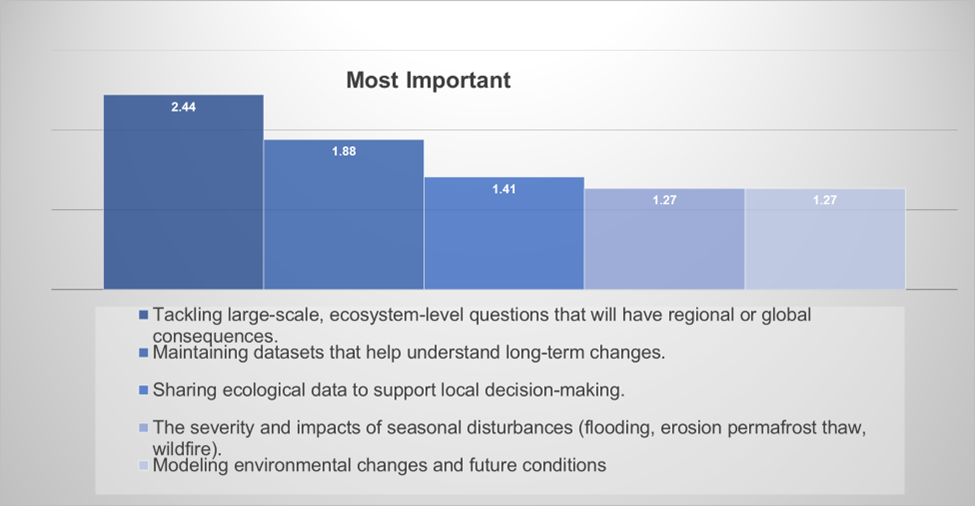
Table 1. Highest rank statements for research on environmental change in Interior Alaska based on perspectives of BNZ CRK LTER members.
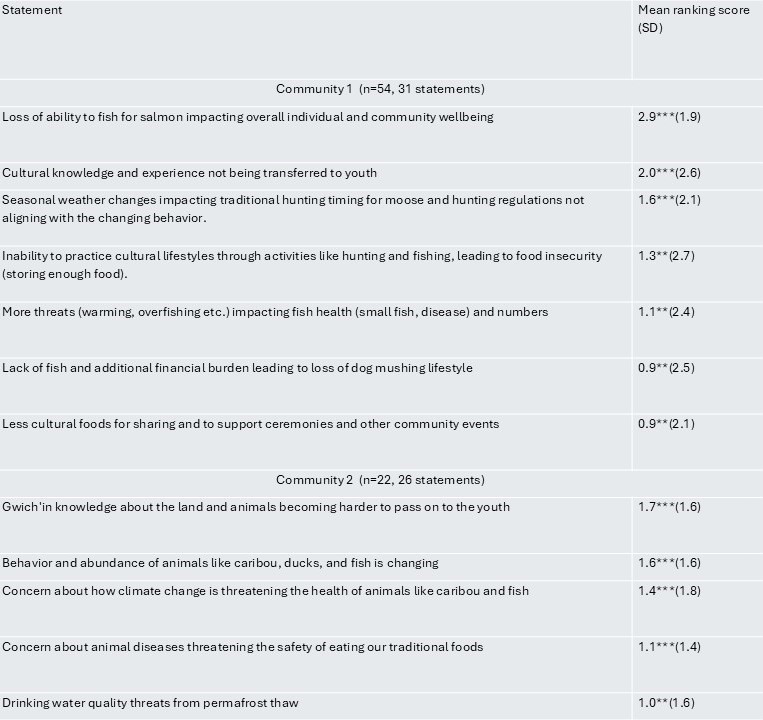
Table 2. Highest rank statements for research on environmental change in Interior Alaska based on perspectives of residents of two rural Indigenous communities in Interior Alaska. Ranking was from -5 (least important) to +5 (most important).
What is the diet, ecological impacts, and community attitudes on wood bison in Interior Alaska?
This research is in the design phase and will be implemented during summer 2026.
The Social-Ecological Systems Working Group works closely with state and federal agencies, rural Indigenous communities, Fairbanks organizations with a special interest in environmental change, and LTER investigators in all other working groups. Our work includes three major studies: 1) Identifying research priorities related to environmental change from a diversity of stakeholders in Interior Alaska, 2) Assessing hunter and management concerns related to moose, and 3) Exploring ecological impacts and community perceptions of recently reintroduced wood bison. Our social-ecological impacts are wide-reaching. First, our research will help guide future research to better align with stakeholder interests. Second, we are resolving a decades-old conflict between hunters and moose managers. Third, we are addressing a major knowledge gap on perceptions and implications of wood bison reintroduction.
- Perspectives and priorities on research on environmental change in Interior Alaska: Todd Brinkman, Funding: LTER, NIH, Collaborators: ANAC, CANHR, Wildlife Conservation Society
- Wood bison diet, ecological impact, and community attitudes: Todd Brinkman, Funding: LTER, ADFG, UAF Troth Yeddha, Alaska Wildlife Research Fund


